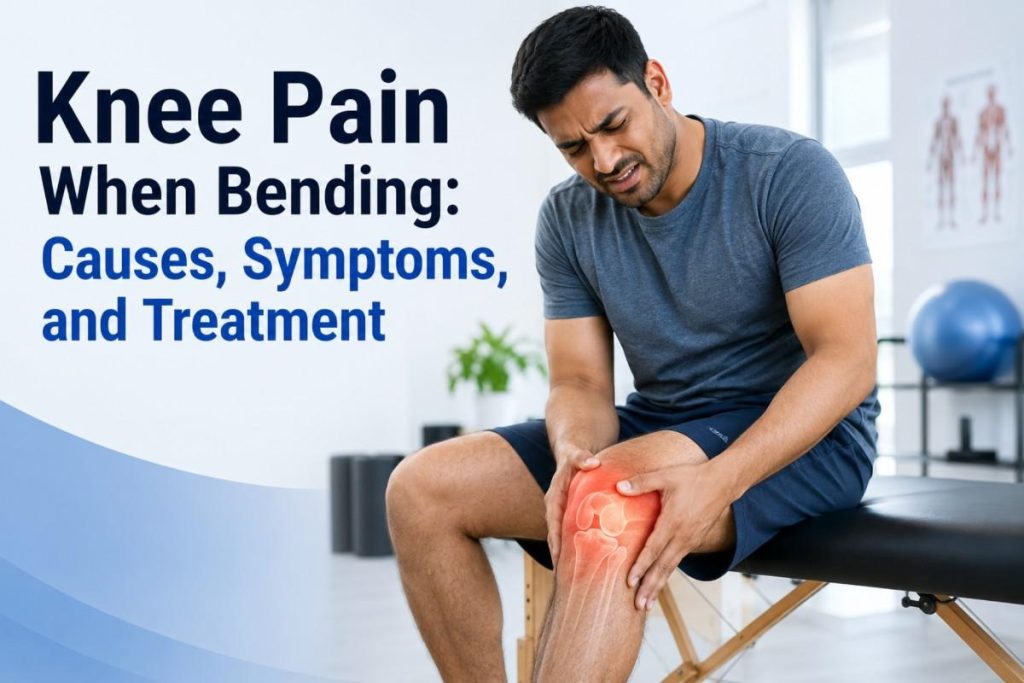
Knee Pain When Bending: Causes, Symptoms, and Treatment
Introduction
Knee pain is one of the most common complaints among adults in India — and it can affect people of all ages, from active young adults to older individuals managing age-related joint changes. If you are experiencing knee pain treatment becomes a priority, especially when that pain strikes during simple daily activities like climbing stairs, sitting cross-legged, or bending down.
What many people do not realize is that knee pain when bending is rarely just a sign of “getting older.” It is often the body’s signal that something specific needs attention — whether that is a muscle imbalance, joint inflammation, a ligament issue, or cartilage wear.
At Kedar Hospital, Mugalivakkam, our experienced orthopedic team has helped thousands of patients from Porur, Iyyappanthangal, Kovur, Gerugambakkam, Mangadu, Pallavaram, and across South Chennai regain mobility and live with less pain. This guide walks you through the most common causes of knee pain when bending, how it is diagnosed, what treatment options are available, and when it is time to see a specialist.
Understanding the Knee Joint
The knee is the largest and most complex joint in the human body. It connects the thigh bone (femur) to the shin bone (tibia) and is cushioned by cartilage, supported by ligaments, and surrounded by muscles and tendons. Because the knee bears the full weight of the body during movement, it is particularly vulnerable to pain and injury.
When bending the knee — whether squatting, kneeling, or climbing stairs — multiple structures must work together. If any of these structures is inflamed, damaged, or worn, pain often results.
Common Causes of Knee Pain When Bending
Understanding the cause of knee pain is the essential first step toward effective treatment. Here are the most common causes:
- Osteoarthritis
Osteoarthritis is the most prevalent cause of knee pain, particularly in adults over 45. It occurs when the protective cartilage within the knee joint gradually wears down, causing the bones to rub against each other.
- Pain is typically worse in the morning or after prolonged sitting
- Stiffness and swelling around the joint
- A grinding or crunching sensation when bending
- More common in women, individuals with excess body weight, and those with physically demanding occupations
- Patellofemoral Pain Syndrome (Runner’s Knee)
This condition involves pain around or behind the kneecap (patella) and is common among active individuals, runners, and those who spend long hours on their feet.
- Sharp or aching pain when bending, squatting, or using stairs
- Pain worsens after prolonged sitting with the knees bent
- No significant swelling in most cases
- Meniscus Tear
The meniscus is a C-shaped piece of cartilage that acts as a shock absorber between the femur and tibia. A tear can occur due to sudden twisting or from gradual degeneration over time.
- Sharp pain when twisting or rotating the knee
- Swelling within 24 to 48 hours of injury
- Difficulty fully straightening or bending the knee
- A feeling of the knee “locking” or “giving way”
- Ligament Injuries (ACL, PCL, MCL)
Ligament injuries are common in sports and can also result from falls or accidents. The anterior cruciate ligament (ACL) is one of the most commonly injured ligaments.
- Sudden, severe pain at the time of injury
- Rapid swelling
- Instability or difficulty bearing weight
- A popping sound may be heard at the time of injury
- Bursitis
Bursae are small fluid-filled sacs that reduce friction around the knee joint. When they become inflamed — due to repetitive kneeling, overuse, or infection — bursitis results.
- Swelling and warmth over the front of the knee
- Pain when bending or pressing on the area
- More common in people who kneel frequently for work
- Tendinitis
Inflammation of the tendons around the knee — most commonly the patellar tendon — causes pain below the kneecap, especially when bending or jumping.
- Iliotibial (IT) Band Syndrome
The IT band is a thick band of fibrous tissue running from the hip to the shin. When it becomes tight or inflamed, it causes pain on the outer side of the knee, particularly during bending movements.
- Gout or Pseudogout
In some cases, knee pain results from the deposit of uric acid crystals (gout) or calcium crystals (pseudogout) within the joint, causing sudden, severe pain and swelling.
Warning Signs That Should Not Be Ignored
While mild knee discomfort sometimes resolves with rest, certain symptoms require prompt medical attention. Consult a doctor without delay if you experience:
- Severe pain that makes weight-bearing impossible
- Significant swelling or visible deformity of the knee
- Inability to fully bend or straighten the knee
- Fever along with a swollen, warm knee (may indicate infection)
- Knee pain following an accident, fall, or sports injury
- Pain that has persisted for more than two weeks without improvement
- Knee giving way or buckling unexpectedly
How Is Knee Pain Diagnosed?
A thorough diagnosis is essential before any treatment plan is recommended. At Kedar Hospital, our orthopedic specialists use a comprehensive approach:
Clinical Assessment:
- Detailed medical and symptom history
- Physical examination of joint mobility, swelling, and pain points
- Assessment of gait and posture
Diagnostic Investigations:
- X-ray — to assess bone structure, joint space, and signs of arthritis
- MRI scan — to evaluate soft tissue structures including cartilage, ligaments, and meniscus
- Ultrasound — for assessing tendons and bursae
- Blood tests — to rule out rheumatoid arthritis, gout, or infection
- Joint fluid analysis — if infection or crystal-induced arthritis is suspected
A precise diagnosis ensures that treatment is targeted and effective, rather than generalized.
Knee Pain Treatment Options
Treatment for knee pain depends entirely on the underlying cause, severity, and the patient’s overall health and lifestyle. Options range from conservative management to surgical intervention.
Conservative (Non-Surgical) Treatment
For the majority of patients, non-surgical approaches are the first line of management:
- Rest and activity modification — Reducing activities that aggravate the knee while maintaining gentle movement
- Ice and heat therapy — Ice reduces acute swelling; heat helps relax stiff joints
- Physiotherapy — Targeted exercises to strengthen the muscles around the knee, improve flexibility, and correct movement patterns
- Pain relief medication — Anti-inflammatory medications (NSAIDs) to reduce pain and swelling, as prescribed by a doctor
- Knee bracing or supportive devices — To stabilize the joint during activity
- Weight management — Reducing body weight significantly decreases stress on the knee joint
- Corticosteroid injections — Used in selected cases to reduce severe inflammation within the joint
- Hyaluronic acid injections — May be recommended for knee osteoarthritis to improve joint lubrication
Surgical Treatment
When conservative measures do not provide adequate relief, or when structural damage requires repair, surgical options may be considered:
- Arthroscopy — A minimally invasive procedure to diagnose and treat internal knee problems, including meniscus repair and cartilage smoothing
- Ligament reconstruction — For significant ACL or other ligament tears
- Partial or total knee replacement — For advanced osteoarthritis where the joint surface is severely damaged
Note: The decision to proceed with surgery is made jointly by the patient and their orthopedic specialist, based on clinical findings, lifestyle needs, and the degree of functional impairment. Surgery is not always necessary and is recommended only when clearly indicated.
Common Myths and Facts About Knee Pain
Myth | Fact |
Knee pain is a normal part of aging and nothing can be done | Many causes of knee pain are treatable; early intervention often prevents progression |
Rest is always the best remedy for knee pain | Prolonged rest without appropriate movement can weaken the knee further; guided physiotherapy is often more beneficial |
Surgery is always needed for knee pain | The majority of knee pain cases are managed successfully without surgery |
Exercise makes knee pain worse | Appropriate, guided exercise often strengthens the knee and reduces pain significantly |
Knee replacement is only for elderly patients | Knee replacement may be considered for any patient with severe joint damage that significantly limits quality of life |
Recovery Expectations
Recovery timelines vary considerably depending on the cause and treatment approach:
- Mild strains or bursitis: 2 to 6 weeks with rest, physiotherapy, and medication
- Meniscus tear (conservative management): 6 to 8 weeks
- Ligament reconstruction (ACL surgery): 6 to 12 months for return to full activity
- Partial knee replacement: 6 to 12 weeks for most daily activities; full recovery up to 6 months
- Total knee replacement: 3 to 6 months for most functional activities; ongoing physiotherapy is important
Consistent physiotherapy, lifestyle modifications, and follow-up care are critical to achieving the best possible outcomes.
Lifestyle Changes That Support Knee Health
- Maintain a healthy body weight to reduce joint load
- Engage in low-impact exercises such as swimming, cycling, or walking on even surfaces
- Strengthen the quadriceps, hamstrings, and hip muscles through guided physiotherapy
- Wear well-fitted, supportive footwear
- Avoid prolonged kneeling, squatting, or sitting on the floor without appropriate support
- Follow a balanced diet with adequate calcium and vitamin D for bone health
Stay hydrated to support joint lubrication
Orthopedic Care at Kedar Hospital, Mugalivakkam
At Kedar Hospital, we understand that persistent knee pain affects not just your mobility but your independence, your work, and your quality of life. Our orthopedic department offers compassionate, evidence-based care for patients dealing with joint pain, sports injuries, and musculoskeletal conditions across all age groups.
Serving patients from Porur, Mugalivakkam, Iyyappanthangal, Kovur, Gerugambakkam, Mangadu, Pallavaram, and near GST Road, we provide accessible, affordable orthopedic care close to home.
Our orthopedic services include:
- Experienced orthopedic surgeons and joint specialists
- Comprehensive clinical assessment and diagnostic workup
- On-site digital X-ray and MRI imaging for accurate diagnosis
- Full-service physiotherapy and rehabilitation department
- Minimally invasive arthroscopic procedures
- Joint replacement surgery with post-operative care
- Corticosteroid and hyaluronic acid joint injection therapy
- Personalized treatment planning tailored to each patient’s lifestyle and goals
- 24/7 emergency orthopedic care for acute injuries and fractures
- Coordinated care with diagnostics, general medicine, and emergency departments
Our team works with each patient to understand their specific concerns, explain their diagnosis clearly, and create a treatment plan that is practical, evidence-based, and centered on restoring function and reducing pain.
Practical Information for Your Orthopedic Consultation
What to bring:
- Any previous X-rays, MRI reports, or medical records related to your knee
- A list of current medications and supplements
- Health insurance documents if applicable
- Comfortable, loose clothing that allows easy examination of the knee
- A list of your symptoms, including when they started and what makes them better or worse
When to seek emergency care:
- Severe pain following an injury or fall
- Visible deformity or displacement of the knee
- Complete inability to bear weight
- Fever combined with a hot, swollen knee
- Sudden loss of feeling or circulation below the knee
Affordability: Kedar Hospital is committed to providing high-quality orthopedic care at transparent, affordable pricing. Our team can assist you with health insurance queries and payment guidance.
Frequently Asked Questions (FAQs)
Conclusion
Knee pain when bending is a condition that deserves proper attention — not just short-term relief. Understanding the underlying cause, seeking timely diagnosis, and following a structured knee pain treatment plan can make a significant difference in your mobility, comfort, and long-term joint health.
Whether your pain is related to arthritis, a sports injury, or daily wear and tear, the right care from an experienced orthopedic team can help you move better and live more comfortably. At Kedar Hospital, Mugalivakkam, we are committed to providing thorough, compassionate, and affordable orthopedic care to patients across Porur, South Chennai, and surrounding areas.
Do not let knee pain limit your life. Book a consultation with our orthopedic specialist today.