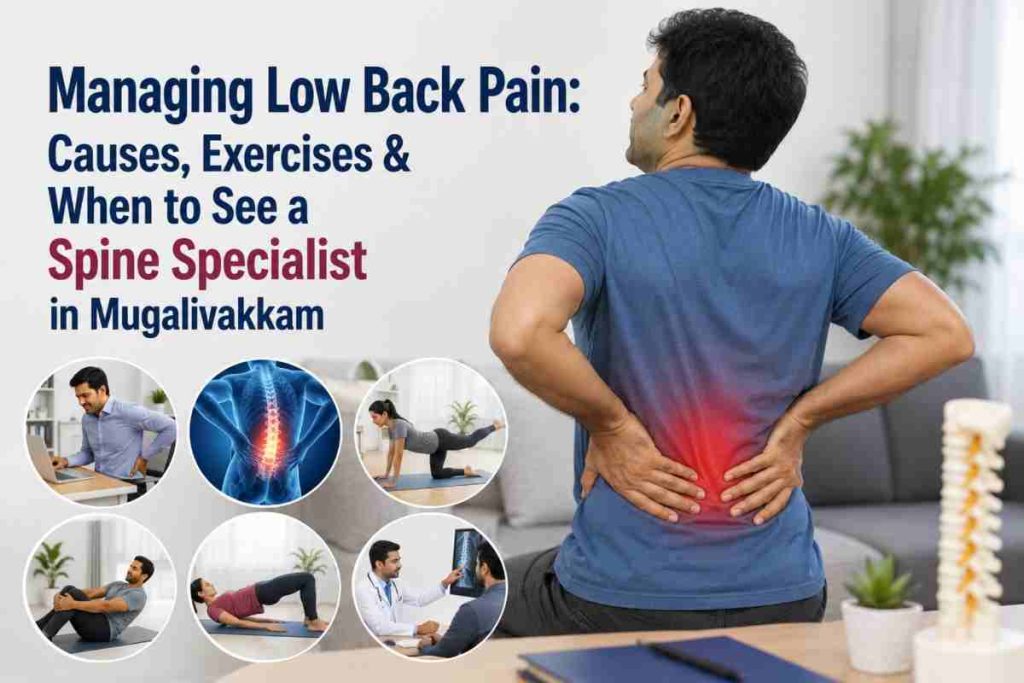
Managing Low Back Pain: Causes, Exercises & When to See a Spine Specialist in Mugalivakkam
Introduction
If you’ve been dealing with a dull ache or sharp twinge in your lower back, you’re far from alone. Low back pain is one of the most common reasons people visit an orthopedic doctor, affecting people at their desks, in the kitchen, on the road, and even while simply getting out of bed.
For many, it’s a temporary discomfort that eases with rest. For others, it becomes a recurring concern that affects daily life, work, and sleep. Finding effective low back pain relief starts with understanding what’s causing it and knowing which steps are safe to try at home — and when it’s time to see a specialist.
This article covers common causes of low back pain, safe exercises, warning signs that shouldn’t be ignored, and treatment approaches, along with how Kedar Hospital in Mugalivakkam supports patients from Porur, Iyyappanthangal, Kovur, and across South Chennai with orthopedic and spine-related care.
Common Causes of Low Back Pain
Low back pain can stem from a range of causes, and identifying the likely source helps guide the right approach to relief:
- Muscle strain or sprain – often from lifting improperly, sudden movements, or overexertion
- Poor posture – prolonged sitting, especially with poor desk or seating setup
- Sedentary lifestyle – weak core and back muscles due to limited physical activity
- Disc-related issues – such as a bulging or herniated disc pressing on nearby nerves
- Degenerative changes – natural wear and tear of the spine with age
- Obesity or excess weight – added strain on the lower spine
- Pregnancy-related changes – shifting posture and ligament changes during pregnancy
Most cases of low back pain are mechanical in nature — related to muscles, joints, or posture — rather than a sign of a serious underlying condition.
Symptoms and Warning Signs to Watch For
While mild, short-term back pain is common, certain symptoms should prompt a visit to an orthopedic doctor rather than waiting it out:
- Pain that persists beyond two to three weeks despite rest and home care
- Pain radiating down one or both legs, especially below the knee
- Numbness, tingling, or weakness in the legs or feet
- Loss of bladder or bowel control
- Unexplained weight loss alongside back pain
- Fever accompanying severe back pain
- Pain following a fall, accident, or injury
These signs can indicate nerve involvement or other conditions that need prompt medical evaluation.
When Should You Go to the Emergency Room?
This is a question many patients aren’t sure about. Seek emergency care immediately if low back pain is accompanied by loss of bladder or bowel control, sudden and severe leg weakness, or occurs after a significant fall or trauma — these can indicate a serious spinal or nerve issue requiring urgent attention. For pain without these red-flag symptoms, a scheduled orthopedic consultation is usually appropriate.
Diagnosis: What Tests Are Usually Required
For most low back pain cases, doctors begin with a physical examination and a detailed history of the pain — when it started, what makes it better or worse, and any related symptoms. Based on findings, further evaluation may include:
- X-rays – to check bone alignment and rule out fractures
- MRI scans – recommended when nerve involvement or disc issues are suspected
- Blood tests – occasionally used to rule out infection or inflammatory causes
Not every patient needs imaging immediately; many cases of mechanical back pain are diagnosed clinically and managed conservatively first, with imaging reserved for persistent or red-flag symptoms.
Common Myths & Facts About Back Pain
Myth: Bed rest is the best treatment for back pain. Fact: Prolonged bed rest can actually slow recovery; gentle movement and gradual activity are generally more effective for most mechanical back pain.
Myth: Back pain always means a slipped or herniated disc. Fact: Most back pain is due to muscle strain or poor posture; disc-related issues are one of several possible causes and require specific evaluation to confirm.
Safe Exercises for Low Back Pain Relief
The following are commonly recommended, gentle exercises — but it’s best to check with your doctor before starting, especially if your pain is severe or persistent:
- Knee-to-chest stretch – gently pulling one knee toward the chest while lying down
- Pelvic tilts – lying down and gently flattening the lower back against the floor
- Cat-cow stretch – alternating arching and rounding the back on all fours
- Bridging exercise – lifting the hips gently while lying on your back with knees bent
- Walking – low-impact movement that supports circulation and mobility
Exercises should be done slowly and stopped if they worsen pain. A physiotherapist or orthopedic doctor can tailor a plan based on your specific condition.
Treatment Options and Recovery Expectations
Treatment for low back pain is typically approached in stages, starting with the least invasive options:
- Rest and activity modification – short-term reduction of aggravating activities, not complete inactivity
- Pain relief medication – as advised by a doctor, for short-term symptom control
- Physiotherapy – targeted exercises and techniques to strengthen supporting muscles
- Posture and ergonomic correction – adjusting seating, sleeping position, and daily habits
- Injections or advanced treatment – considered for specific cases under specialist guidance
- Surgical evaluation – reserved for cases with significant nerve compression or when conservative treatment hasn’t helped over a reasonable period
Recovery timelines vary widely depending on the cause, severity, and how early treatment begins. While many people notice improvement within a few weeks with consistent care, chronic or recurrent back pain may need a longer, more structured management plan under an orthopedic doctor’s supervision.
Lifestyle Changes That Support Spine Health
- Maintain good posture while sitting, especially during long desk hours
- Use proper lifting technique — bend at the knees, not the waist
- Stay physically active with regular, low-impact movement
- Maintain a healthy body weight to reduce strain on the spine
- Choose supportive mattresses and ergonomic chairs where possible
- Take short movement breaks during long periods of sitting or driving
Kedar Hospital's Approach to Orthopedic & Spine Care
Kedar Hospital, a trusted multispeciality hospital serving Mugalivakkam and South Chennai since 1996, offers dedicated orthopedic care for patients dealing with back pain, joint issues, and musculoskeletal concerns.
Our approach includes:
- Experienced orthopedic specialists who evaluate each case individually before recommending treatment
- In-house diagnostic and imaging support, including X-ray services, for faster evaluation
- Physiotherapy guidance integrated into recovery planning
- 24×7 emergency care for cases involving injury, trauma, or severe symptoms
- ICU and patient monitoring available for more complex or post-surgical cases
- Personalised treatment plans based on each patient’s pain pattern, lifestyle, and recovery goals
- Accessible care for patients from Porur, Iyyappanthangal, Kovur, Gerugambakkam, Mangadu, Pallavaram, and along GST Road
We focus on realistic, transparent communication about what each treatment option can achieve, helping patients make informed decisions about their spine and joint health without overstated promises.
Practical Information for Patients
When to consult a doctor: If back pain persists beyond two to three weeks, worsens over time, or is accompanied by any of the warning signs mentioned above.
What to bring to your appointment:
- Details of when the pain started and what triggers or eases it
- Any previous imaging reports or prescriptions
- A list of current medications
- Information about your daily activities or occupation, which can help identify contributing factors
Emergency preparedness: Sudden, severe back pain following an accident or fall, or pain with loss of bladder/bowel control, should be treated as an emergency.
Affordability guidance: Kedar Hospital’s team can provide clarity on consultation fees, diagnostic costs, and applicable insurance support before your visit.
Conclusion
Low back pain is common, but that doesn’t mean it should be ignored, especially when it persists or comes with warning signs like numbness or radiating pain. Understanding the likely cause, trying safe home measures, and knowing when to seek professional care can make a real difference in how quickly and effectively you recover.
If back pain is affecting your daily life, or you’re unsure whether your symptoms need medical attention, the orthopedic team at Kedar Hospital in Mugalivakkam is here to help with a thorough evaluation and a personalised care plan. Book a consultation today and take a confident step toward better spine health, with the compassionate, patient-focused care South Chennai families have relied on for years.
Frequently Asked Questions (FAQs)