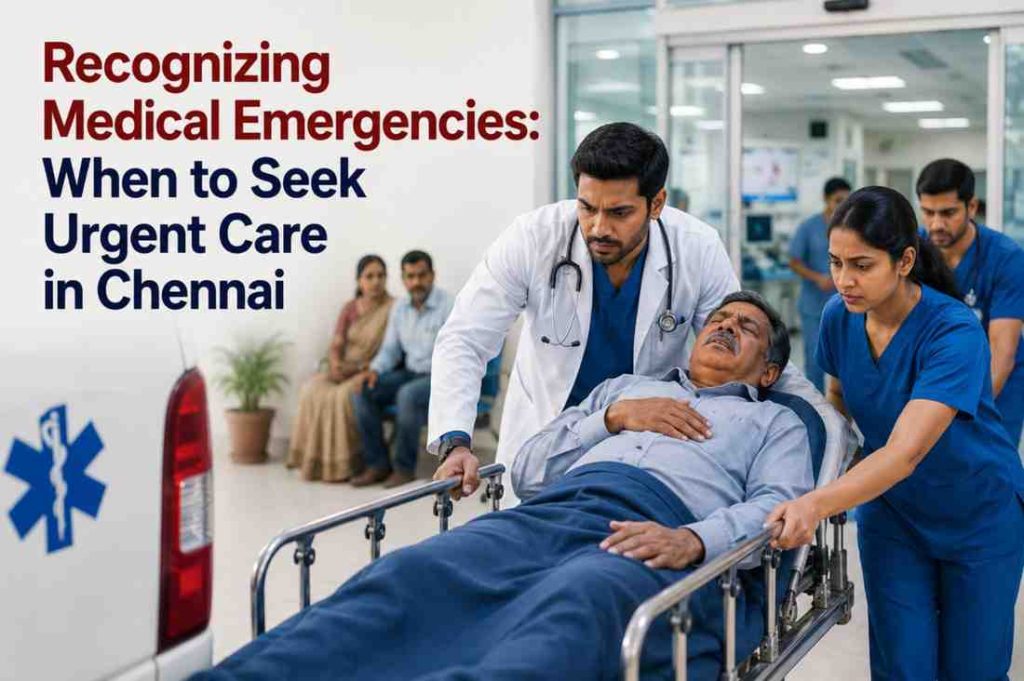
Recognizing Medical Emergencies: When to Seek Urgent Care in Chennai
Introduction
Knowing whether a symptom is serious enough to warrant a hospital visit can be genuinely confusing, especially in the middle of a stressful moment. Recognizing medical emergency signs early can make a real difference in how quickly appropriate care is received, which is why understanding these warning signs matters for every family, not just those managing existing health conditions. For residents of Mugalivakkam, Porur, and surrounding South Chennai areas, having this knowledge readily available can support faster, more confident decision-making when it matters most.
This article walks through common medical emergency signs across different situations, when to call for an ambulance versus arranging your own transport, and what to expect during an emergency hospital visit. At Kedar Hospital, we believe accessible, clear information helps our community respond more effectively when facing a health crisis.
Why Recognizing Emergencies Matters
Some medical conditions worsen rapidly, and delaying care can affect outcomes. At the same time, not every concerning symptom requires an emergency room visit. Understanding the difference helps you make timely, appropriate decisions, seeking urgent care when truly needed, without unnecessary panic for non-emergency situations.
General Medical Emergency Signs
Certain symptoms are widely recognized as requiring immediate medical attention, regardless of the underlying cause:
– Difficulty breathing or shortness of breath
– Chest pain or pressure, particularly if it spreads to the arm, jaw, or back
– Sudden confusion, difficulty speaking, or weakness on one side of the body
– Severe, uncontrolled bleeding
– Loss of consciousness or fainting
– Severe allergic reactions, including facial or throat swelling
– High fever accompanied by severe symptoms like stiff neck or rash
– Severe abdominal pain that comes on suddenly
– Signs of stroke, such as facial drooping, arm weakness, or slurred speech
Emergency Signs Specific to Different Patient Groups
For Elderly Patients
– Sudden confusion or disorientation
– Falls resulting in inability to move or significant pain
– Unexplained, rapid decline in mobility or alertness
For Pregnant Women
– Heavy vaginal bleeding
– Severe abdominal pain
– Severe headaches with vision changes
– Reduced fetal movement
For Orthopedic or Injury-Related Emergencies
– Visible bone deformity or open fractures
– Inability to move or feel a limb after injury
– Severe swelling following trauma
For Children
– High fever with lethargy or difficulty waking
– Difficulty breathing
– Persistent vomiting or signs of dehydration
When to Call an Ambulance vs Arranging Your Own Transport
Calling an ambulance is generally recommended when:
– The person is unconscious or unresponsive
– There’s difficulty breathing or signs of a heart attack or stroke
– Moving the person could worsen an injury, such as a suspected spinal injury
– The situation is rapidly worsening
If the patient is stable enough and a private vehicle is available and faster, arranging your own transport to the nearest emergency facility may be appropriate, though when in doubt, calling for professional emergency transport is generally the safer choice, since ambulance teams can begin stabilizing care en route.
What Happens When You Arrive at the Emergency Room
Triage assessment — Medical staff quickly evaluate the severity of your condition to prioritize care appropriately
Initial stabilization — Addressing any immediate life-threatening concerns first
Diagnostic evaluation — Tests such as blood work, imaging, or ECG, depending on your symptoms
Specialist involvement — Depending on the emergency, relevant specialists may be brought in for further evaluation
Treatment and next steps — This may involve admission for further care, procedures, or discharge with follow-up instructions
Common Situations Patients Are Unsure About
Many patients hesitate before seeking emergency care, wondering if their symptoms are “serious enough.” It’s important to understand that healthcare providers would rather evaluate a symptom that turns out to be non-urgent than have a patient delay care for something genuinely serious. When in doubt, especially with symptoms like chest pain, difficulty breathing, or sudden weakness, it’s safer to seek prompt evaluation.
Preparing for an Emergency Hospital Visit
– Keep a list of current medications and known allergies accessible, ideally on your phone
– Have identification and any relevant medical history documents ready if possible
– Save your nearest hospital’s emergency contact number in your phone
– Know the fastest route to your nearest multispeciality hospital
Kedar Hospital's Approach to Emergency Care
At Kedar Hospital in Mugalivakkam, our emergency department is equipped to manage a wide range of urgent medical situations, from cardiac and respiratory emergencies to trauma and pregnancy-related complications. Our multispeciality setup means emergency medicine, diagnostics, orthopedics, and women & child care specialists are available for prompt, coordinated evaluation when needed.
Our emergency team prioritizes rapid triage and stabilization, supported by on-site diagnostic imaging and laboratory services to guide fast, informed treatment decisions. We understand that emergency situations are frightening for patients and families alike, which is why clear communication remains a priority throughout the process, from initial assessment through treatment planning.
Being based in Mugalivakkam, Kedar Hospital is accessible to patients from Porur, Iyyappanthangal, Kovur, Gerugambakkam, Mangadu, and Pallavaram, supporting timely emergency access for our South Chennai community without extended travel during a critical situation.
Practical Information for Emergencies
If you or a family member experiences any of the warning signs discussed above, seek emergency medical evaluation promptly rather than waiting to see if symptoms improve. Keep emergency contact numbers, including your nearest hospital, saved and easily accessible. If possible, bring identification, medication lists, and relevant medical history, though emergency care will never be delayed for missing documentation. Our team can also assist with insurance-related questions during the admission process.
Conclusion: Preparedness Supports Faster, Better Care
Recognizing medical emergency signs and understanding when to seek urgent care can make a genuine difference in how quickly and effectively a health crisis is addressed. While this guide offers general awareness, it’s not a substitute for professional medical judgment in an actual emergency.
If you or a loved one is experiencing a medical emergency, Kedar Hospital’s team in Mugalivakkam is here to provide prompt, coordinated, and compassionate care. For non-emergency questions or to learn more about our services, we invite you to schedule a consultation with our team. We’re committed to being a trusted, accessible healthcare partner for our South Chennai community.
Frequently Asked Questions (FAQs)